

Essilor Stellest impresses at the AAD Congress with strong study data and new generation of ophthalmic lenses
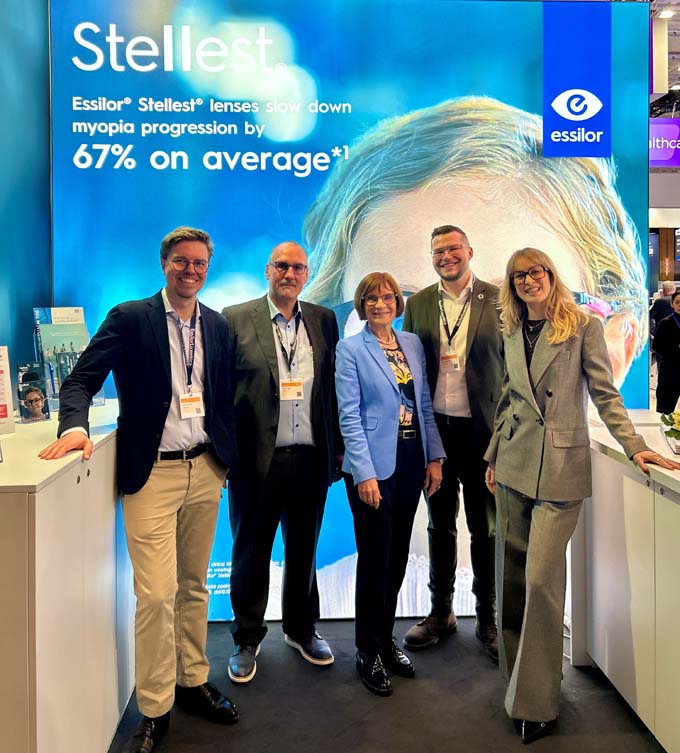
Essilor's presence at this year's AAD Congress in Düsseldorf met with a great response from the ophthalmology community. The focus was on the latest scientific findings in myopia management with Essilor Stellest lenses and the presentation of the new generation Essilor Stellest 2.0. The high visitor frequency at the stand and the lively participation in the specialist presentations underline the growing importance of evidence-based solutions in everyday practice.


Long-term data confirm sustainable effectiveness
Since its market launch in 2022, millions of children worldwide have already been fitted with Essilor Stellest lenses (1). They have been shown to slow the progression of myopia by 67 % (2, 3). This broad application is also reflected in the quality of the clinical data. Particularly noteworthy is the exceptionally high participant retention rate of 72 percent over a period of six years (4), which further strengthens the significance of the study results.
In addition, the 6-year data presented show a lasting effect in myopia management. Over the entire observation period, myopia progression was reduced by 1.95 dpt and axial length growth was slowed by 0.81 mm (5). These results confirm the long-term effectiveness of the H.A.L.T. technology (Highly Aspherical Lenslet Target) and provide a sound basis for its use in everyday care.
Relevance for everyday practice: a later start also makes sense
A key aspect of the presentations at the stand was the high practical relevance of the data. After all, reality shows that many children are only presented at a later age. This is precisely where the studies provide important findings: Progression can still be significantly influenced even if therapy is started later at the age of 10 to 15. Essilor Stellest lenses were able to measurably slow down both refractive development and axial length growth in this group (6). The clear message from practice is therefore that it is also worth starting myopia control in older children.
The scientific relevance is additionally underpinned by international evaluations. The US Food and Drug Administration (FDA) has recognized Essilor Stellest lenses as an effective solution for slowing the progression of myopia. It is the first and only FDA-approved lens clinically proven to slow the progression of myopia in children (7,8). In addition, a recent systematic review and network meta-analysis from 2025, based on a broad database of over 12,000 children, shows that HAL lenses - including Stellest - are among the most effective measures for controlling axial length growth (9).
Essilor Stellest 2.0: Further development for even greater effectiveness
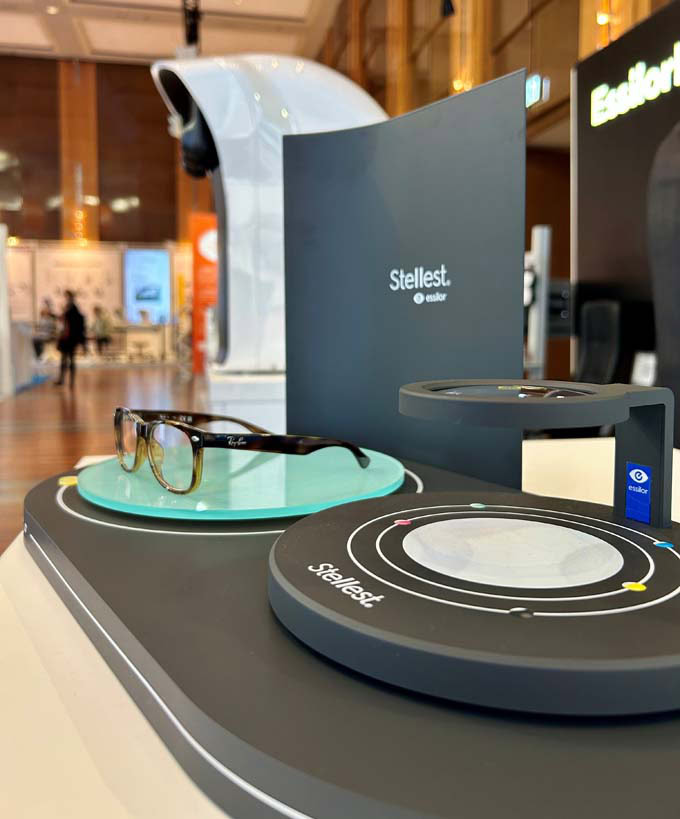
Another highlight of the trade fair appearance was the presentation of Essilor Stellest 2.0. The new generation of lenses is based on the further developed H.A.L.T. MAX technology and aims to further increase the effectiveness of myopia control. Thanks to increased asphericity and a more powerful microlens structure, a larger volume of unfocused light is generated, which is projected further away from the retina (10). At the same time, the proven properties that make Essilor Stellest so successful in everyday life are retained: clear vision, high aesthetics and easy and safe handling.
The AAD Congress once again demonstrated the importance of close collaboration between ophthalmologists and optometrists for successful myopia management. Essilor Stellest and the further development Essilor Stellest 2.0 are solutions that combine evidence and practical feasibility - and thus make a decisive contribution to the long-term eye health of children.
References:
1 EssilorLuxottica, data based on global supply since market launch in 2022.
2 Compared to single vision lenses, when worn for 12 hours a day for two consecutive years.
3 Bao J, Huang Y, Li X, Yang A, Zhou F, Wu J, Wang C, Li Y, Lim EW, Spiegel DP, Drobe B, Chen, H. Spectacle lenses with aspherical lenslets for myopia control vs single-vision spectacle lenses: a randomized clinical trial. JAMA ophthalmology. 2022;140(5):472-8. doi:10.1001/jamaophthalmol.2022.0401.
4 Based on 58 children initially randomized, of whom 42 completed the 6-year follow-up. Participant numbers shown at each year reflect those with available data at that time point (e.g., n=54 analyzed after year 2).
5 EssilorLuxottica, data from 6-year study on myopia progression (SER) and axial length development (AL), presented at BCLA 2025, among others.
6 Li X. et al. Myopia control efficacy of spectacle lenses with aspherical lenslets: results of a 3-year study and subgroup analysis at later treatment initiation (10-15 years).
7 Compared to single vision lenses. Results of a prospective, randomized, double-blind, multicenter clinical trial in the USA with myopic children aged 6 to 12 years at the start of treatment.
8 Essilor International, available data (2025)
9 Schmidt DC. et al. Efficacy of interventions for myopia control in children: A systematic review with network meta-analyses. Acta Ophthalmologica. 2025. database: 71 studies, 12,154 children.
10 EssilorLuxottica, technical description of H.A.L.T. MAX technology and Stellest® 2.0 (higher asphericity and microlens performance).
Source and further information: www.essilor.com