

ARVO - Miyosmart iQ - Clinical data after 12 months
Breakthrough results from a clinical study by Hoya Vision Care and Hong Kong Polytechnic University have shown that a new lens design for myopia control can halt clinically relevant progression of myopia* in 9 out of 10 children in the first year of wear.


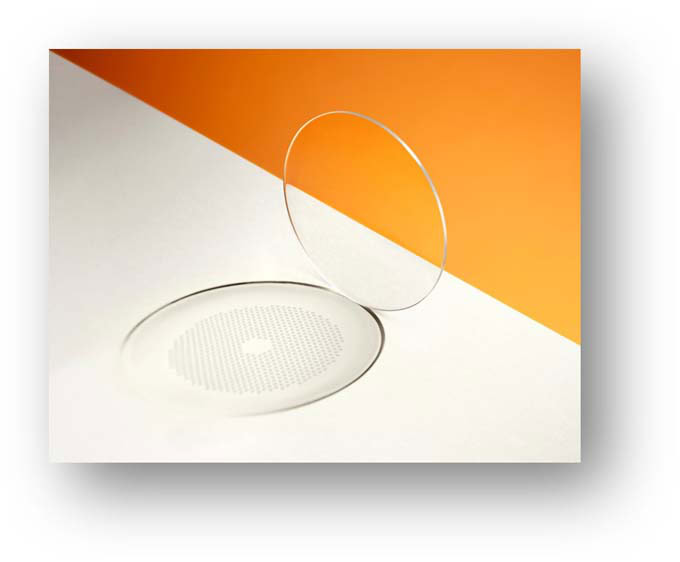
The results, presented at the 2026 ARVO Annual Meeting in Denver, represent the best results to date for myopia control in children wearing lenses with Defocus Incorporated Multiple Segments (D.I.M.S.) technology.
The randomized controlled clinical trial (RCT) showed that of 196 school children aged 4 to 12 years with myopia in Hong Kong who completed the study to the end, those who wore Miyosmart iQ lenses had on average no progression of myopia after 12 months.1 Axis elongation, which includes the excessive growth of the eye that drives myopia progression in children,5 was below or at the level of emmetropes - people without refractive error - in children wearing Miyosmart iQ lenses.1
For the first time, the effectiveness of myopia control with spectacle lenses based on D.I.M.S. technology has been demonstrated in children as young as 4 years old, representing an important milestone in early myopia control.1
„At Hoya Vision Care, we strive for a world without myopia. This milestone is a truly groundbreaking advance in myopia control and represents an important step towards the vision we want to realize for children around the world. To date, no study of myopia control lenses has demonstrated this level of effectiveness in reducing vision loss,“ said John Goltermann Lassen, CEO of Hoya Vision Care. „Our mission is to improve lives through good vision by continuously raising the standard of care in myopia control and ensuring that thoughtful innovation and careful craftsmanship lead to significant clinical benefits for children and support the work of optometrists.“
Nearsightedness, also known as myopia, is an increasingly significant global health problem affecting billions of people. It is predicted to affect around half of the world's population by 2050, compared to around a third of people today.6 Early initiation of effective myopia control measures reduces the impact of the cumulative progression of myopia over the years, significantly reducing the risk of developing severe myopia and related sight-threatening diseases later in life.7
„Untreated myopia today will lead to irreversible vision loss tomorrow. If we delay, this epidemic will shape the next generation,“ said Prof. Serge Resnikoff, Chairman of the International Myopia Institute, at an exclusive press conference on April 22.
In children aged 4 to 12 years, the mean change in spherical equivalent error (SER) over a 12-month period was +0.046 dpt in the Miyosmart iQ group compared to -0.534 dpt in the single vision (SV) control group, which corresponds to a myopia control efficacy of over 100 %.1,3 The mean change in axial length (AL) over a 12-month period was 0.075 mm in the Miyosmart iQ group, compared to 0.346 mm in the SV group. Thus, Miyosmart iQ reduced excessive axial lengthening to levels below or comparable to the growth of emmetropic eyes.1-3
In myopic children aged 4 to 6 years, Miyosmart iQ showed efficacy in myopia control of 65 % in SER and 44 % in AL over a 12-month period (mean changes in SER -0.220 D and -0.635 D, mean changes in AL 0.266 mm and 0.475 mm in the Miyosmart iQ and SV groups, respectively). 1,3,4 These results set a new benchmark for the efficacy of myopia control at this young age.
„These results not only show that the progression of myopia can be halted over an average period of 12 months and across all childhood stages, but also demonstrate - for the first time in myopia control lenses - the effectiveness in children from the age of 4 with early onset myopia. This allows us to control myopia at a crucial stage when it progresses rapidly and the risk of long-term consequences is highest,“ said Dr. Natalia Vlasak, Global Head of Medical and Scientific Affairs at Hoya Vision Care.
In older children aged 7 to 12 years, typically studied in most randomized controlled trials (RCT) of myopia control solutions, Miyosmart iQ demonstrated efficacy in myopia control of over 100 % in SER and 94 % in AL over a 12-month period (mean changes in SER +0.155 D and -0.511 D; mean changes in AL 0.019 mm and 0.310 mm in the Miyosmart iQ and SV groups, respectively).3
Children of all ages studied showed high compliance with daily, all-day wearing of Miyosmart iQ, resulting in successful myopia control.1,3
Miyosmart iQ is the most advanced evolution of Miyosmart, a technology backed by more than 100 peer-reviewed scientific publications.9 The new lens design builds on D.I.M.S. technology with Triple Enhanced Design (TED) and features three key improvements that ensure greater effectiveness in myopia control in children:3
- Defocused segments positioned closer to the geometric center of the lens are thought to continuously stimulate the near-peripheral retina - also known as the retinal „sweet spot “12 - which has been identified in several studies as particularly sensitive to the myopic defocus signal that regulates myopia progression.10-1
- Higher defocusing power, which generates a stronger myopic defocusing signal.
- An extended treatment area that ensures more comprehensive coverage of the child's peripheral field of vision, even with larger frames.
„Miyosmart iQ is the result of years of dedicated research and collaboration between scientists, clinicians and optical engineers. The Triple Enhanced Design is based on a deep understanding of how the eye responds to a myopic defocus signal and a determination to push the boundaries of what lenses can do. To see these years of work translate into such results is deeply satisfying,“ said Prof. Chi-ho To, Visiting Professor of Experimental Optometry at Hong Kong Polytechnic University.
* Clinically relevant myopia progression is defined as a SER change of more than -0.50 dpt over a wearing period of 12 months.
Bibliography
- Tse DYY, et al. Myopia Control Efficacy of Defocus Incorporated Multiple Segments Spectacle Lens with Triple Enhanced Design: a 12-month randomized controlled trial. Association for Research in Vision and Ophthalmology (ARVO) 2026 Annual Meeting, May 3-7, 2026. Abstract 2523. Available from: https://eppro02.ativ.me/web/index.php?page=IntHtml&project=ARVO26&id=4486941. (Accessed: 16.04.2026).
- Kaymak H, et al. Defocus Incorporated Multiple Segments Spectacle Lenses with Triple Enhanced Design Normalize and Neutralize Axial Elongation in Myopic Children: A Randomized Three-Arm Trial Using AMMC Physiological Growth Criteria. Abstract OD72, ARVO Annual Meeting 2026, Denver, USA. Available from: https://eppro02.ativ.me/web/index.php?page=IntHtml&project=ARVO26&id=4490935. Accessed: (16.04.2026).
- HOYA data on file. HOYA MiYOSMART iQ spectacle lens clinical outcomes. 04/2026.
- Tse DYY, et al. Myopia Control Efficacy of Defocus Incorporated Multiple Segments Triple Enhanced Design Spectacle Lenses. The 41st Asia-Pacific Academy of Ophthalmology Congress, February 5-8, 2026. Abstract 205567. Available from: https://2026.apaophth.org/abstract/?code=205567. (Accessed: 16.04.2026)
- Carr BJ, et al. The Science Behind Myopia. 2017. In: Webvision: The Organization of the Retina and Visual System [Internet]. Salt Lake City (UT). University of Utah Health Sciences Center. Available from: https://www.ncbi.nlm.nih.gov/books/NBK470669/. (Accessed: 16.04.2026).
- Holden BA, et al. Global Prevalence of Myopia and High Myopia and Temporal Trends from 2000 through 2050. Ophthalmology. 2016;123:1036-42.
- Bullimore MA, et al. The Risks and Benefits of Myopia Control. 2021;128(11):1561–79.
- CLEERE Study Group. Myopia Progression as a Function of Sex, Age, and Ethnicity. Investigative Ophthalmology & Visual Science. 2021:62(10);36-36.
- HOYA Vision Care. Confidence Through Evidence. Available from: https://www.hoyavision.com/vision-products/miyosmart/evidences/. (Accessed: 16.04.2026)
- Smith III EL, et al. Eccentricity-dependent effects of simultaneous competing defocus on emmetropization in infant rhesus monkeys. Vision Res. 2020;177:32-40.
- Panorgias A, et al. Retinal responses to simulated optical blur using a novel dead leaves ERG stimulus. Invest Ophthalmol Vis Sci. 2021;62(10):1.
- Swiatczak B, et al. Retinal “sweet spot” for myopia treatment. Sci Rep. 2024;14:26773.
- HOYA data on file. MiYOSMART spectacle lens commercial data. 04/2026.
Source and further information: www.hoyavision.com