

Europe's eye health in 2035: more digital stress, more short-sightedness
Eye health in Europe is facing a profound structural change. A recent Delphi study conducted by WHU - Otto Beisheim School of Management on behalf of pharmaceutical manufacturer Ursapharm predicts a significant increase in visual problems by 2035, particularly due to increasing screen work, rising myopia and an ageing population.


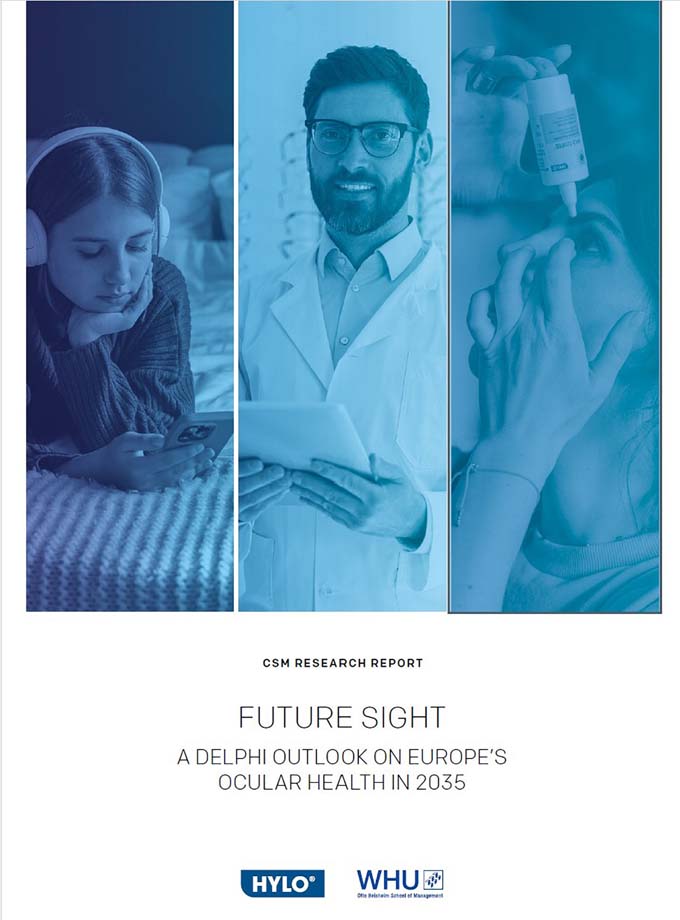
At the same time, the experts surveyed expect strong growth in the European ophthalmology market. For the study, 57 experts from science, medicine, industry and regulation evaluated a total of 14 future projections for ocular health in Europe.
„Our results clearly show that eye health will no longer be a marginal issue in the coming years, but will become a central component of public health care,“ explains study author Prof. Dr. Sascha L. Schmidt from WHU. „Digitalization and demographic change are mutually reinforcing - and are putting the population's visual system under permanent pressure.“
Screen work as the new normal
According to the experts, it can be assumed that around 80 percent of all workplaces in Europe will require a permanent visual focus on screens or comparable displays by 2035. Working from home, AI-supported processes and digital workflows will further accelerate this development.
The growing use of screens is also increasing the significance of computer vision syndrome (CVS), which includes symptoms such as dry eyes, headaches, blurred vision and concentration problems. The study assumes that CVS could be officially included as a disease in the International Classification of Diseases (ICD) by 2035.
„Such recognition would enable standardized diagnoses and targeted therapies for the first time and make the social relevance of digital eye strain visible,“ says Schmidt.
Significant increase in short-sightedness and dry eyes
The forecasts for younger generations are particularly clear: At least 60 percent of under-30s in Europe could be short-sighted by 2035 - due to changes in lifestyle habits such as eye strain at close range and a lack of daylight. At the same time, the experts expect that more than half of the European population will regularly suffer from the symptoms of dry eyes. The main causes are considered to be the increasing use of screens at school, university, work and in the private sphere. The increasing prevalence and use of air conditioning systems is also a potential risk factor. In addition, environmental factors such as air quality in cities or climate change could promote the clinical picture of dry eyes, as could the increasing ageing of the population.
European ophthalmology market grows significantly
The market is growing in parallel with the increasing medical demand: the European ophthalmology market has the potential to double by 2035 compared to 2025. Growth is being driven in particular by new technologies in diagnostics, therapy and prevention - including teleophthalmology, AI-supported screenings, smart lenses and individualized treatment concepts. However, the experts also see structural limits: A shortage of specialists, regulatory framework conditions and costs could limit care capacities.
The market is growing in parallel with the increasing medical demand: the European ophthalmology market has the potential to double by 2035 compared to 2025.
Prevention remains largely voluntary
According to the study, binding political measures such as mandatory annual eye examinations or Europe-wide screen time limits for children are considered difficult to implement. Instead, the responsibility for prevention will continue to lie primarily with the individual. Accordingly, an increase in voluntary protective measures seems realistic. According to the forecast, it can be assumed that more than 70% of Europeans will regularly protect their eyes from UV radiation. And confidence in the influence of diet on eye health is also expected to continue to grow. Digital solutions such as mobile monitoring apps or smart contact lenses offer additional potential for early detection and prevention, but continue to encounter acceptance and data protection concerns.
„The results underline how important it is to take a holistic approach to eye health at an early stage,“ says Christian Krensel, Global Director Marketing & Sales at Ursapharm. „For healthcare companies, this means that we need to invest even more in prevention, education and innovative care solutions - so that increasing demand does not automatically lead to an increasing burden of disease.“
The study makes it clear that eye health will become a strategic issue for healthcare systems, companies and society by 2035. However, the transition from pure treatment to a genuine culture of prevention remains a key challenge.
„Whether Europe manages this change depends on the interplay of political will, technological innovation and individual health behavior,“ summarizes study author Schmidt.
The study was conducted by the Center for Sports and Management (CSM) at WHU - Otto Beisheim School of Management on behalf of Ursapharm Arzneimittel GmbH. The scientific evaluation was carried out independently.
Source and further information on the study and the full report can be found here: https://ursapharm.de/news/future-sight/